Door 1
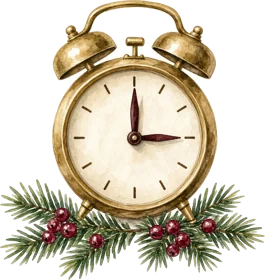
3 AM Club
Sleep left the chat. Again.
Tiny tip
Dear Santa, eight hours. In a row. Please.
What time does your brain usually clock in?
Rina A. Claude, MPharm
24 surprises. Zero instructions from Santa.
Welcome to the advent calendar nobody asked for. One little door a day. A laugh, and the occasional surprise gift. Because midlife deserves a little Christmas magic, too.
Open a door. Have a laugh. Collect a tiny survival tip. And if you’re curious, there’s a little pharmacist’s note waiting below. No homework from Santa.
Doors open on their December date, wherever you are.
Get 3–4 festive emails this December with calendar highlights, a few extra smiles, and occasional book news. No daily inbox avalanche. Unsubscribe anytime.
Send me some Christmas cheerDoor 1
Sleep left the chat. Again.
Tiny tip
Dear Santa, eight hours. In a row. Please.
What time does your brain usually clock in?
Door 2
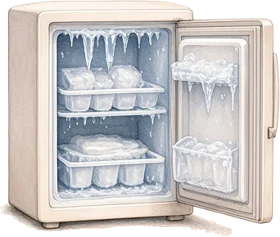
Five-star cooling. Terrible ambiance. Excellent frozen peas.
Tiny tip
Keep a fan handy. Your personal spa deserves accessories.
Hot flashes can bring sudden waves of heat and sweating. They may happen before your periods stop.
Source: The Menopause Society
Door 3
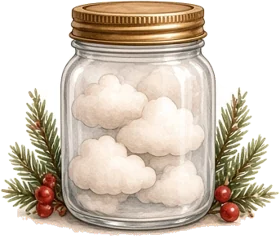
Oops! Where did all my thoughts go? Please return them!
Tiny tip
Write it down before your thoughts escape again.
If Santa could bring back ONE forgotten thing, what would it be?
Memory and concentration difficulties are often reported during perimenopause. Poor sleep can make them harder to manage.
Source: NHS
Door 4
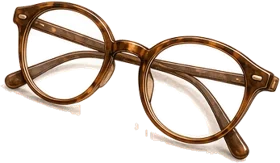
JACKPOT! You found them… on your head.
Tiny tip
Check your head before organizing a search party.
Everyday forgetfulness can feel more noticeable during the menopause transition. Stress and disrupted sleep may also play a part.
Source: NHS
Door 5
Membership automatically activated. No sign-up required. No cancellation button.
Tiny tip
Keep spare pajamas nearby. Your sauna forgot the towels.
How many times have you flipped your pillow tonight? 😂
Night sweats are a common menopause-related symptom. They can interrupt sleep and leave you feeling exhausted.
Source: The Menopause Society

Door 6
Finally! A surprise that doesn’t involve sweating.
Tiny tip
Put your feet up. Santa has brought reading material.
Free gift
I wrote Menopause or Something Else? for women tired of wondering whether every new symptom is hormonal.
Today, I’m sharing a free one-page excerpt to help you start asking better questions.
From Menopause or Something Else? by Rina A. Claude
Normal results do not mean your symptoms are not real. They help narrow the possibilities, but they do not rule out every cause.
If symptoms continue, agree with your clinician what to review next and when. That may mean taking another look at what could be causing your symptoms, reviewing medicines or sleep, or adjusting treatment, rather than automatically ordering more tests.
Seek help sooner if symptoms worsen.
Perimenopause symptoms can overlap with other health concerns. Understanding the possibilities can help you ask better questions.
Source: NICE
Door 7
Someone breathed too loudly. The teapot is furious.
Tiny tip
Make tea. Let the teapot do the screaming.
What tiny thing tested your patience today?
Irritability and mood changes can occur during perimenopause. Sleep, stress and everyday pressures matter, too.
Source: NHS
Door 8
My cardigan has done more cardio today than I have.
Tiny tip
Choose layers. Your cardigan deserves overtime pay.
Temperature changes during hot flashes can make clothing feel uncomfortable. Some women experience sudden warmth followed by chills.
Source: NHS
Door 9
The word is gone. The hand gestures are spectacular.
Tiny tip
Give the word a minute. It may return after Christmas.
What word completely abandoned you recently?
Difficulty concentrating or finding words can accompany menopause-related cognitive complaints. These experiences aren’t the same for everyone.
Source: NHS
Door 10
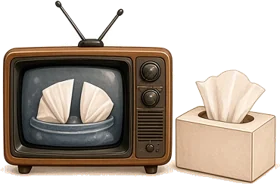
The snowman found his family. I’ve used an entire tissue box.
Tiny tip
Keep tissues beside the popcorn. It’s Christmas movie season.
Mood changes may become more noticeable during perimenopause. Hormonal fluctuations, sleep and life circumstances can all contribute.
Source: NHS; The Menopause Society
Door 11
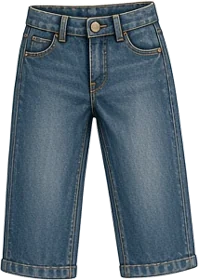
Yesterday they fit. Today we’re negotiating.
Tiny tip
Elastic waistbands. Christmas miracles come in many forms.
What’s your holiday outfit survival strategy?
Some women notice more weight around the middle in midlife. Hormones can play a part, but they are not the only reason.
Source: NHS; Mayo Clinic
Door 12
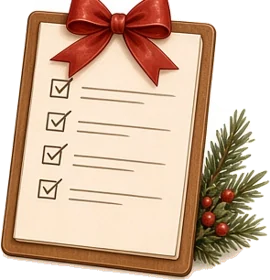
One list your brain doesn’t have to remember.
Tiny tip
Save the checklist somewhere your future self can find it.
Free gift
Some days, remembering what you wanted to ask your doctor is harder than remembering where you parked.
That’s why I’ve created a free checklist to help you organize your symptoms and questions.
No guessing. No pressure. Just a little more clarity.
Get my free checklistKeeping track of symptoms can make it easier to describe your experiences during a medical appointment.
Source: NHS inform
Door 13
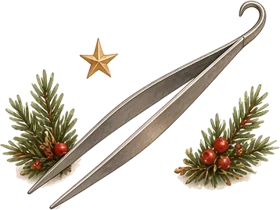
One chin hair. Growing like it’s competing with the Christmas tree.
Tiny tip
Tweezers optional. Christmas decorations optional, too.
Have you met your surprise chin hair yet?
Facial hair can change around midlife. A single new chin hair is common and doesn’t automatically mean something is wrong. Sudden or significant hair growth is worth mentioning to a clinician.
Source: NHS
Door 14
Even my sweater has become a personal enemy.
Tiny tip
Keep your moisturizer closer than your Christmas cookies.
Skin can become drier or itchier around menopause. Hormonal changes may contribute, although other causes are possible.
Source: NHS

Door 15
For the woman who already owns every candle.
Tiny tip
Give something useful. Another scented candle can wait.
Who’s the Gen X girl you’d love to spoil this Christmas?
A little holiday gift idea
Know a woman who’s been asking, “Is this perimenopause or something else?”
My book, Menopause or Something Else?, might be a thoughtful addition to her Christmas list.
Explore the bookPerimenopause can look different from one woman to another. Reliable information can help make conversations about symptoms easier.
Source: NICE
Door 16
Battery empty. Brain still hosting a Christmas party.
Tiny tip
Send the imaginary guests home. It’s bedtime.
Poor sleep and fatigue can affect how women feel during perimenopause. Stress and other factors may contribute, too.
Source: NHS
Door 17
The calendar says one thing. Your period says, “Surprise!”
Tiny tip
Keep a calendar. Apparently, your period has lost hers.
Has your period started making its own holiday plans?
Periods can become less predictable during perimenopause. Unusually heavy bleeding, or any bleeding after 12 months without a period, deserves medical assessment.
Source: NHS
Door 18
Your permission slip to enjoy Christmas your way.
Tiny tip
Save this card. Consider it your official holiday survival kit.
Free gift
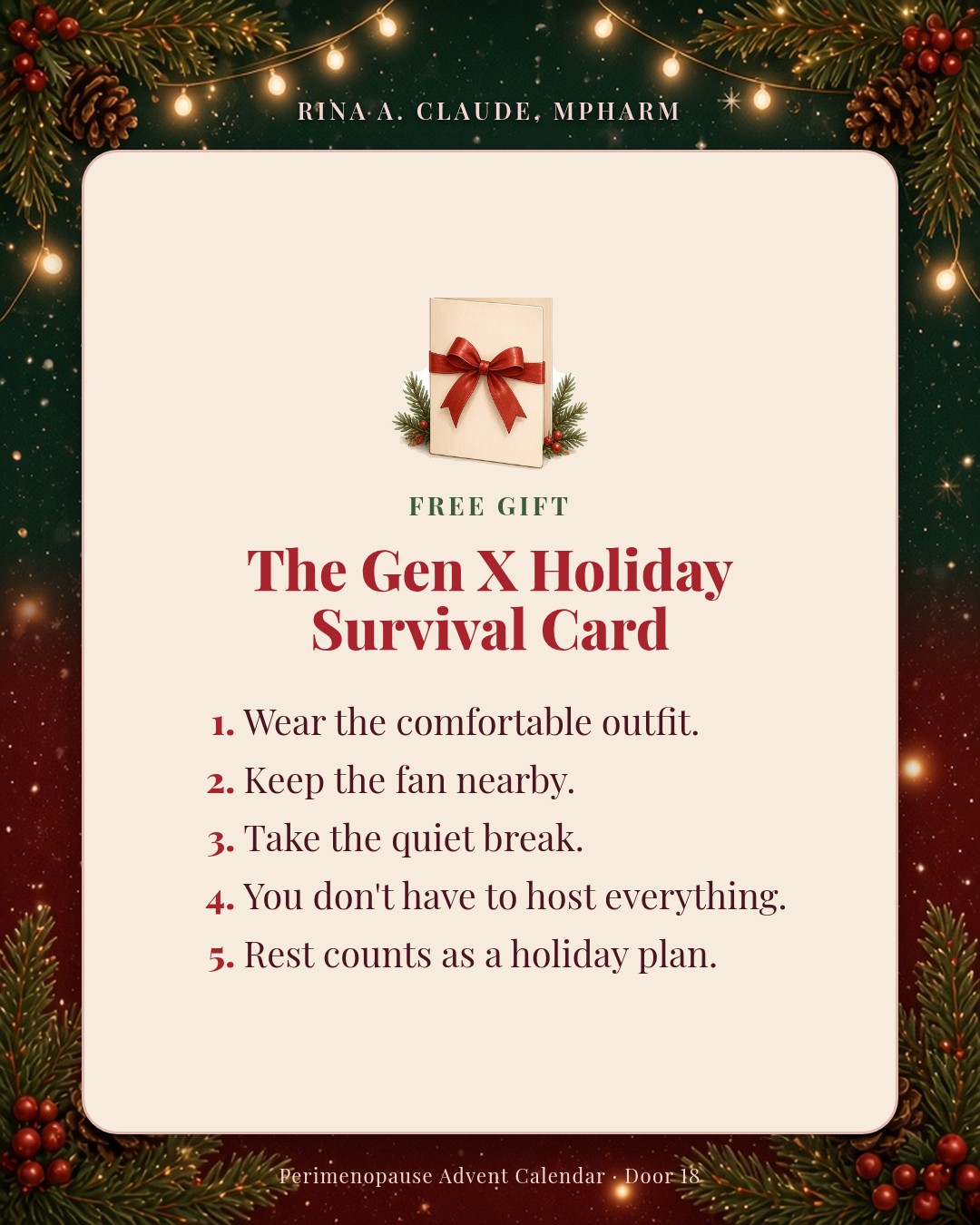 Save your holiday card
Menopause symptoms can affect sleep, comfort and emotional well-being. Small adjustments and support may make demanding days easier.
Source: NHS
Door 19
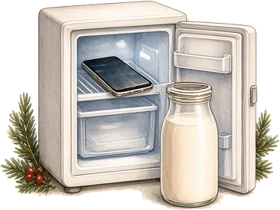
FOUND IT! Nicely chilled. Battery still at 3%.
Tiny tip
Check the fridge before calling your phone.
Where’s the weirdest place you’ve found something you lost?
Memory lapses and trouble concentrating are often reported during perimenopause. But one misplaced phone isn’t a medical diagnosis.
Source: NHS
Door 20
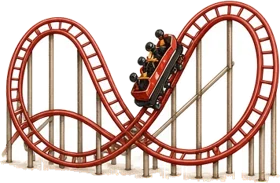
Laughing at noon. Crying at two. Snacks at three.
Tiny tip
Keep snacks handy. The roller coaster has no café.
Door 21
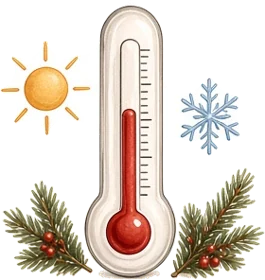
I’m basically a thermostat with opinions.
Tiny tip
Layers, ladies. We’re celebrating all four seasons today.
Who controls your household thermostat?
Hot flashes can include sudden heat, sweating and sometimes chills. They vary widely between women.
Source: The Menopause Society; NHS
Door 22
Dear Santa, I’d like to meet this Sleep woman everyone’s talking about.
Tiny tip
Keep bedtime cozy. Santa can’t deliver sleep by express shipping.
Door 23
Party outfit selected. Invitations politely declined.
Tiny tip
Your pajamas are formalwear if you say they are.
What’s your perfect Christmas Eve bedtime?
Fatigue and disrupted sleep can make demanding days feel harder. Not every low-energy evening is a menopause symptom.
Source: NHS
Door 24
The best gift wasn’t hiding behind a door.
Tiny tip
Save a little of your Christmas kindness for yourself.
Your Christmas Eve letter from Rina
Dear friend,
We opened 24 doors together. Some made us laugh. Some probably felt a little too familiar.
But here’s what I hope you’ll remember: you don’t have to understand every change in your body all at once.
You deserve answers, kindness, and someone who truly listens.
Thank you for spending these little December moments with me.
Merry Christmas, wherever you are and however you’re feeling.
With love,
Rina
 Save the card
If you’d like to understand your symptoms more deeply, Menopause or Something Else? is here whenever you’re ready.
Explore the bookEvery woman’s menopause experience is different. You deserve reliable information, support and care that takes your concerns seriously.
Source: NICE; The Menopause Society
Education, not medical advice. This site does not provide medical advice, diagnosis or treatment. Talk to your doctor about your health.